Eight Arrested in Fun Coffee Fraud Investigation
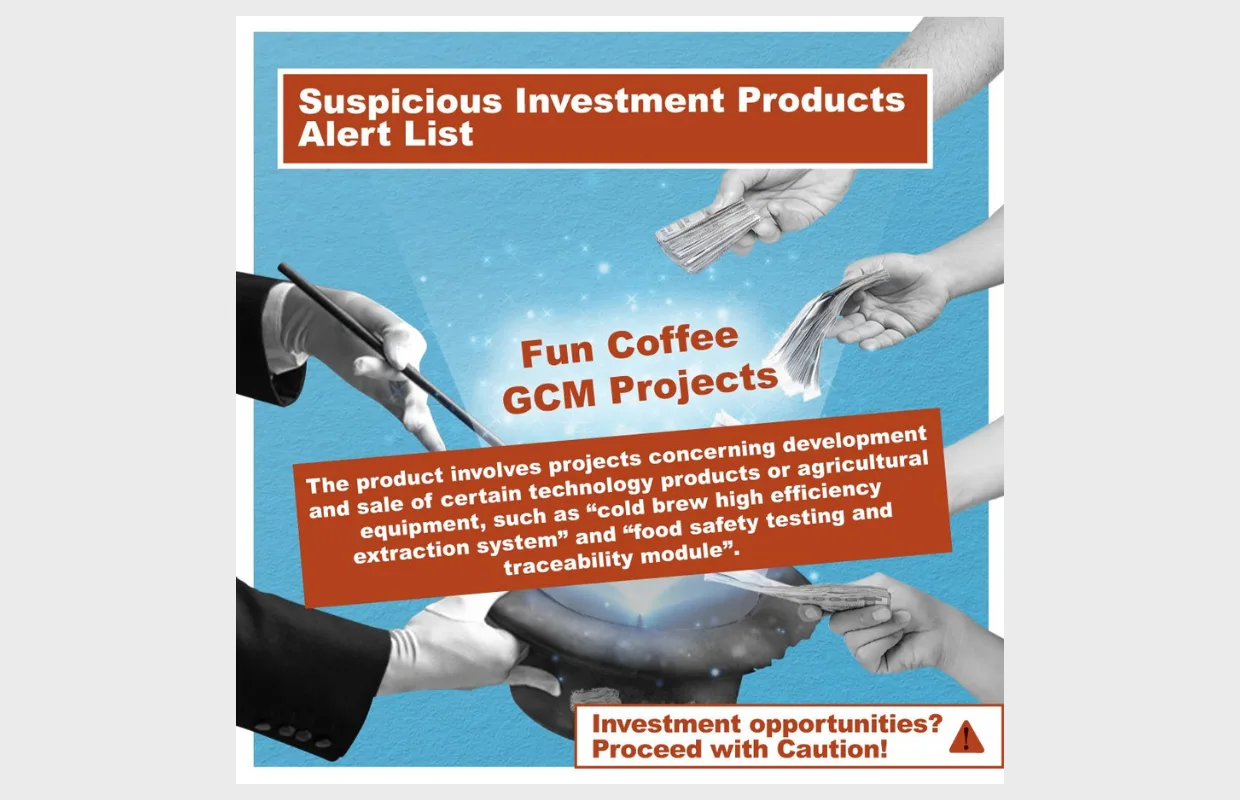
Nick Brown| August 10, 2026 An image circulated by the Hong Kong Securities and Futures Commission in July. A purported Vietnam-based company that marketed itself as a health-conscious coffee investment brand is at the center of a cross-border cryptocurrency fraud investigation. The operation, known as Fun Coffee, has left hundreds of investors in Hong Kong and Macao reporting financial losses, while a joint police operation has led toeight arrests, according to regional news reports and Hong Kong police. Fun Coffee claimed on its website that it was establishing headquarters on Phu Quoc Island in Vietnam, with more than $1 billion in assets and a team exceeding 5,000 people. Authorities in Hong Kong said people began participating in Fun Coffee investment programs in 2025. Hong Kong police said their investigation found that the company generated no real profits and paid earlier investors with money collected from later ones, a structure resembling a Ponzi scheme. On July 13, the Securities and Futures Commission (SFC) of Hong Kong added Fun Coffee GCM Projects to itslist of suspicious investment products. Hong Kong Police Force Headquarters. Photo by Tksteven/Wikimedia Commons,licensed under Creative Commons Attribution-ShareAlike 2.5 (CC BY-SA 2.5). According to the Hong Kong Police Force’s Commercial Crime Bureau, Fun Coffee told investors it was developing advanced coffee-brewing equipment, “coffee-gene” optimization technology, and automated irrigation and fertilization systems. In July, the company announced plans to expand into mainland China, claiming it had acquired a coffee plantation in Baoshan, Yunnan, while outlining future sales of roasted coffee, drip bags, capsules and ready-to-drink products. Investors were told that cryptocurrency deposits held for longer periods and in larger amounts would generate higher returns, with police saying the company advertised annualized returns as high as 278%. On July 20, the company’s mobile app stopped functioning, investors were unable to withdraw
Nick Brown| August 10, 2026 An image circulated by the Hong Kong Securities and Futures Commission in July.
Tech news moves quickly enough that any single story is best read as one data point in a longer arc. The products change, the companies shuffle, but the underlying patterns — incentives, supply chains, regulatory lag — tend to repeat.
The most useful frame for reading coverage like this is to ask what would have to be true for the announcement to matter in a year. Most of the time, the honest answer is "not much." Occasionally, the answer is "everything," and those are the stories worth following up on.
We will keep tracking this one as it develops. If the details shift materially, we will update this piece rather than publish a follow-up that contradicts it.