Climate Pressures Bring New Attention to Excelsa Coffee
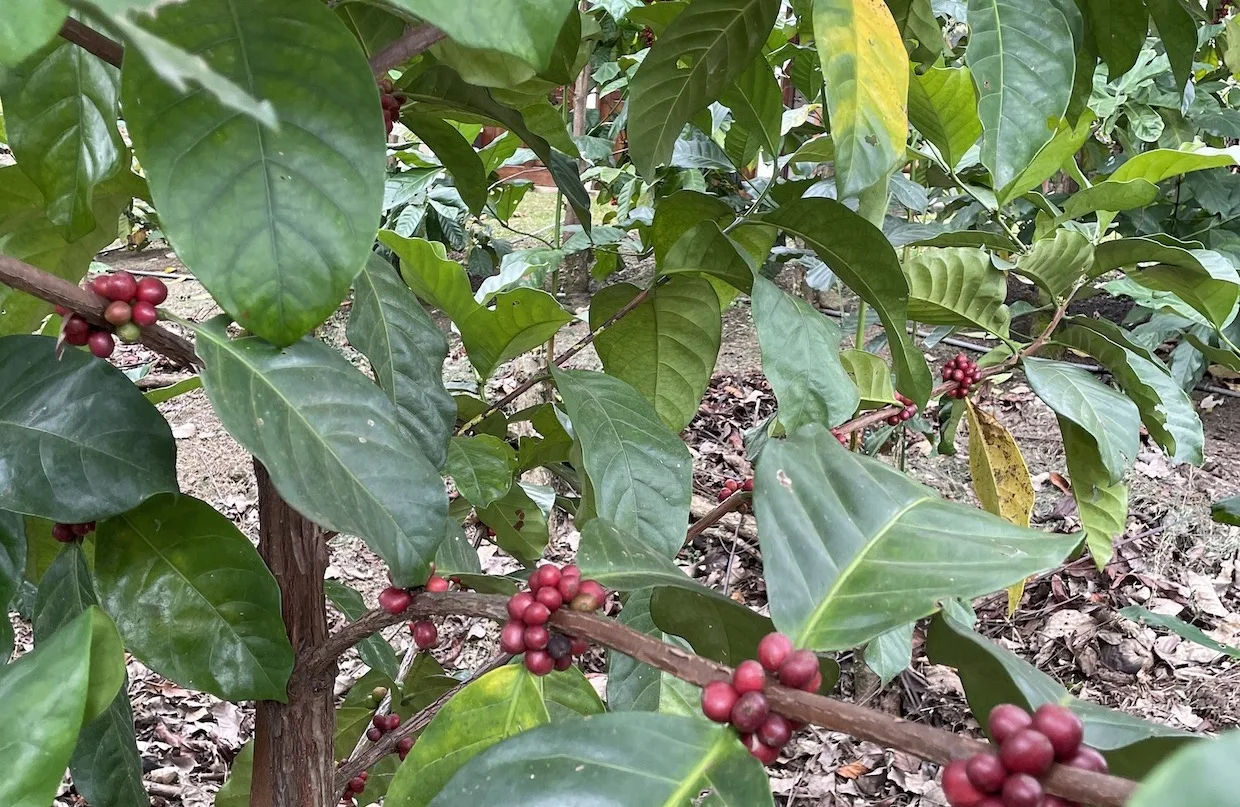
Meena Menon| August 3, 2026 An Excelsa coffee tree. Daily Coffee News photo by Nick Brown. Arabica and Robusta, which dominate global coffee production, are increasingly vulnerable to climate change, including heat stress, erratic rainfall and pest pressures. Lesser-known species such as Excelsa are gaining attention for their resilience and adaptability. Growers and researchers, including those at the Royal Botanic Gardens, Kew, are studying underutilized coffee species to diversify crops and build resilience to climate change. Blending coffee and music comes naturally to Carnatic musician and coffee roaster Akshay Vaidyanathan. In 2019, he founded Kapikottai, a coffee brand he describes as a fun entrepreneurial experiment. A year later, he launched a new specialty coffee roast using Excelsa coffee beans, a less popular species of coffee. While he introduced it as a small, experimental batch, Vaidyanathan says, “It’s been an institution since then, and sells out fast. A lot of people don’t realise it is another species. They feel it’s just good coffee.” That distinction may soon matter more than ever. Both Arabica and Robusta, the two species that dominate global coffee production, face mounting stress from rising temperatures and shifting rainfall patterns.Temperatures above 30°C reduce yields, affect bean quality and increase plant stress, particularly for Arabica coffee, which is more heat-sensitive than Robusta. India grows both varieties, though primarily Robusta, largely across the Western Ghats. With changing climate conditions, researchers and farmers are turning to alternative and lesser-known coffee species. Among them is Excelsa. An overlooked species gains new relevance Excelsa (C. dewevrei),native to parts of Tropical and West Africaas well as Southeast Asia, has long existed on the margins of India’s coffee landscape. The trees, often planted as boundary markers or for shade, can be found in South and Northeast India. However, they were never widely commercialized for coffee
Meena Menon| August 3, 2026 An Excelsa coffee tree.
Tech news moves quickly enough that any single story is best read as one data point in a longer arc. The products change, the companies shuffle, but the underlying patterns — incentives, supply chains, regulatory lag — tend to repeat.
The most useful frame for reading coverage like this is to ask what would have to be true for the announcement to matter in a year. Most of the time, the honest answer is "not much." Occasionally, the answer is "everything," and those are the stories worth following up on.
We will keep tracking this one as it develops. If the details shift materially, we will update this piece rather than publish a follow-up that contradicts it.