What We Touch with Our Hands May Affect What We Taste in the Cup
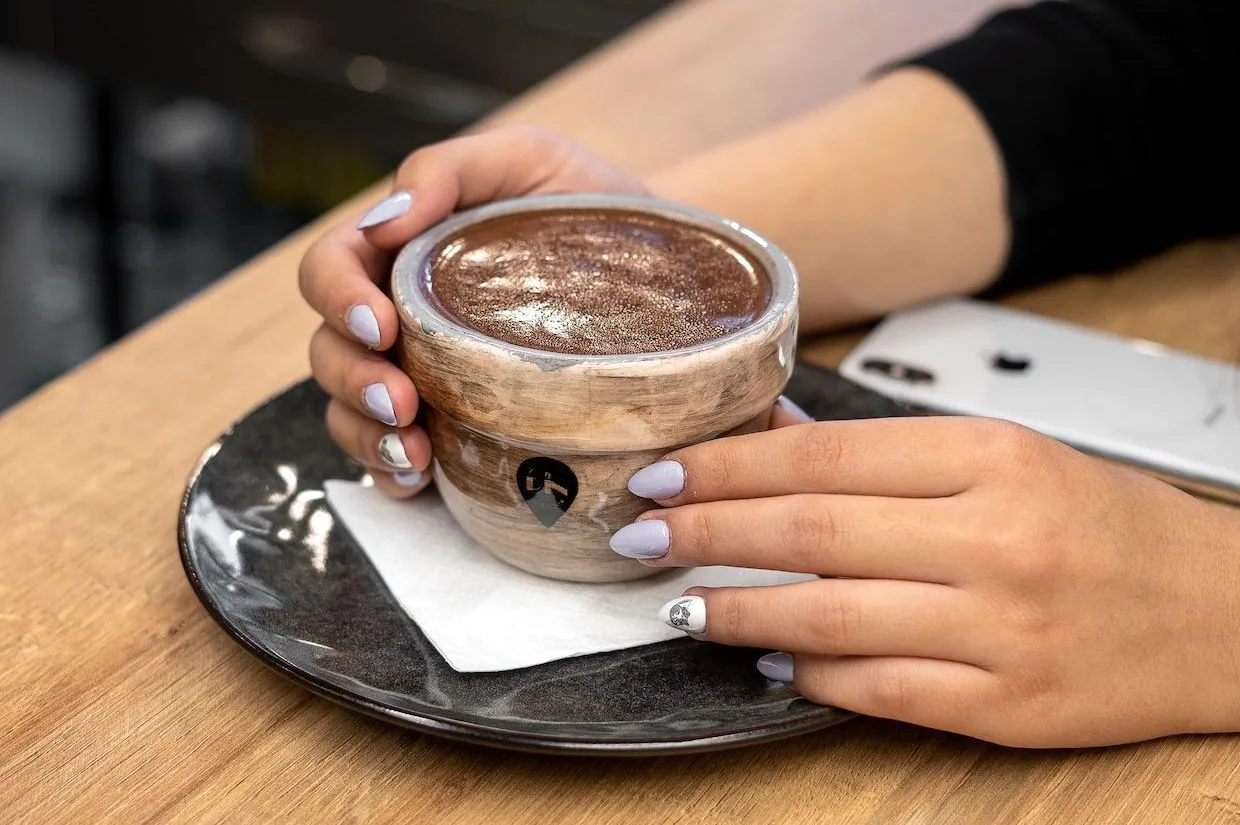
Daily Coffee News Staff| August 19, 2026 A new coffee-focused sensory study suggests that what people feel with their hands — including the texture of cup sleeves, desks, menus or even phones — may subtly influence what they perceive in the cup. Published online June 3 inMultisensory Research, the study found that blindfolded participants rated coffee as less acidic when tactile sensations were smooth rather than rough, even when those sensations came from objects not attached to the cup. The research was led by Natsumi Kubo and Atsunori Ariga of the Department of Psychology atChuo University in Tokyo. The paper adds to a growing body of coffee research suggesting that flavor perception is shaped not only by roasted coffee chemistry, brewing method or inherent attributes of the coffee, but also by external sensory cues. Smooth vs. Rough In the new study’s first experiment, 92 blindfolded Japanese participants drank black coffee from cups fitted with either a rough sleeve made from sandpaper or a smooth sleeve made from kraft paper,according to Chuo. The coffee, identified in the study abstract as a “Rich Blend” capsule from Nestlé, was served at 68°C, with about 115 milliliters per serving. Participants who drank from the rough-sleeve cups before the smooth-sleeve cups perceived the coffee from the smooth-sleeve cups as less acidic. The effect did not appear when the order was reversed. The researchers said the design helped isolate hand feel from other cues. Participants were blindfolded, and the cups themselves were made from the same material, reducing the possible influence of sight or lip feel. Chuo said effects on sweetness and aftertaste were not confirmed. Other Rough Stuff Two additional experiments tested whether the tactile cue needed to come from the cup itself, and whether the timing of touch and taste mattered. In Experiment 2,
Daily Coffee News Staff| August 19, 2026 A new coffee-focused sensory study suggests that what people feel with their hands — including the texture of cup sleeves, desks, menus or even phones — may subtly influence what they perceive in the cup.
Tech news moves quickly enough that any single story is best read as one data point in a longer arc. The products change, the companies shuffle, but the underlying patterns — incentives, supply chains, regulatory lag — tend to repeat.
The most useful frame for reading coverage like this is to ask what would have to be true for the announcement to matter in a year. Most of the time, the honest answer is "not much." Occasionally, the answer is "everything," and those are the stories worth following up on.
We will keep tracking this one as it develops. If the details shift materially, we will update this piece rather than publish a follow-up that contradicts it.